One call, eight questions, one honest look.
On Thursday 12 November we held the first webinar for future Hosts of Who are you?. People joined from New York, the United Kingdom, Spain, North Macedonia and beyond. We told the story, played a small round of the format together, answered questions and drew one free Event licence.
If you missed it, here is everything that matters, and how to take the next step.
The show that saved a festival
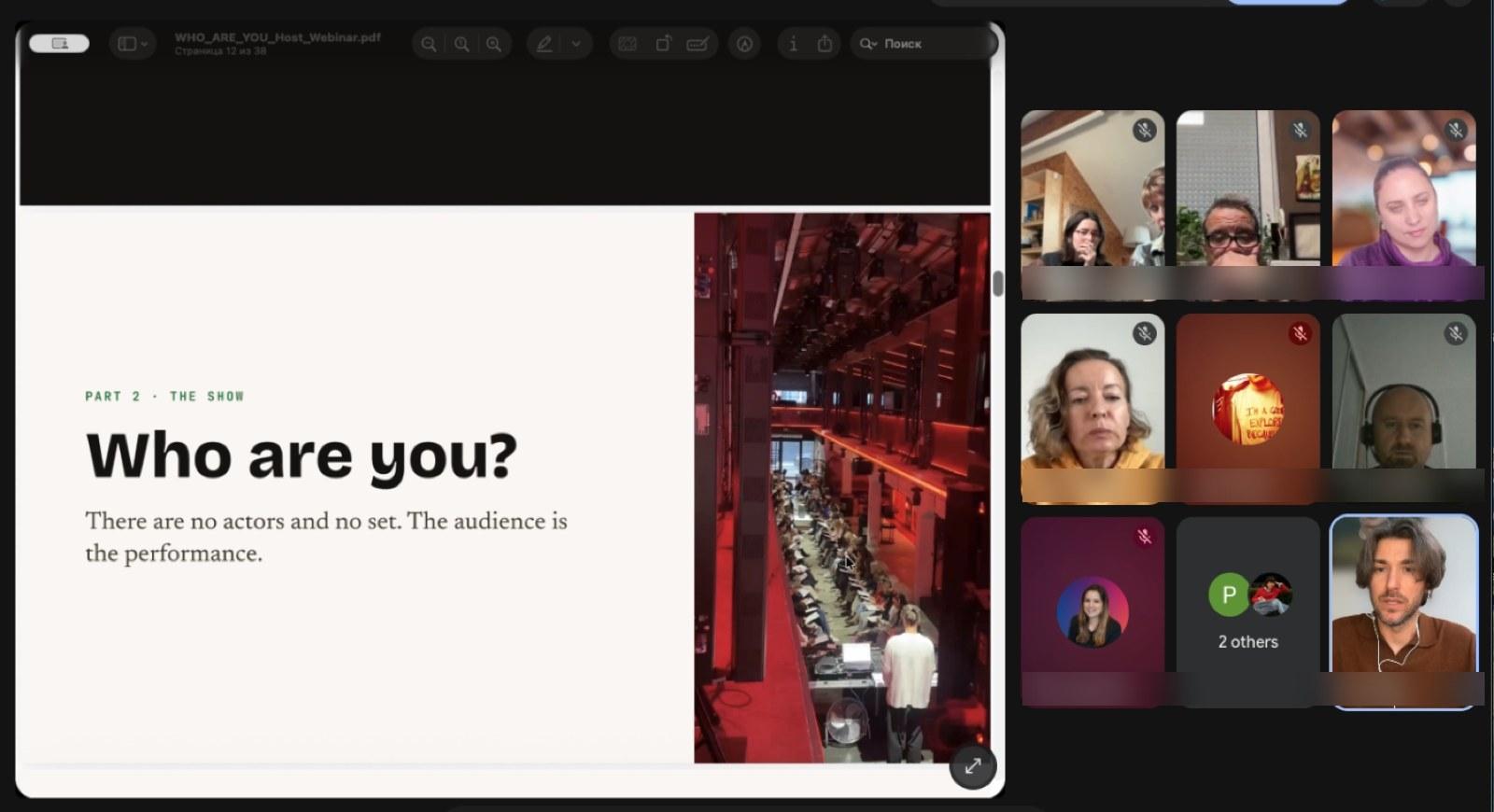
Alexander Weinstein runs a theatre festival in Limassol, a city of 200,000 people. In a season when bringing artists was impossible, one format could still be played: no cast, no set, no stage. Two rows of chairs and the people who came.
It filled the room from the first evening. Since then it has been played more than ten times in the same small city, and each time the room was full.
What happens in the room
A hidden voice asks every guest to sit across from someone they have never met, and not to speak. Under each chair is an envelope with a hundred questions about the person in front of you. Where are they from? Do they live alone? What are they afraid of? You do not ask. You look, and you guess.
Then everyone stands up, takes a glass of Prosecco and swaps envelopes. Now you read what a stranger saw in you. Only after that are you allowed to talk, and from that moment it is almost impossible to separate people.
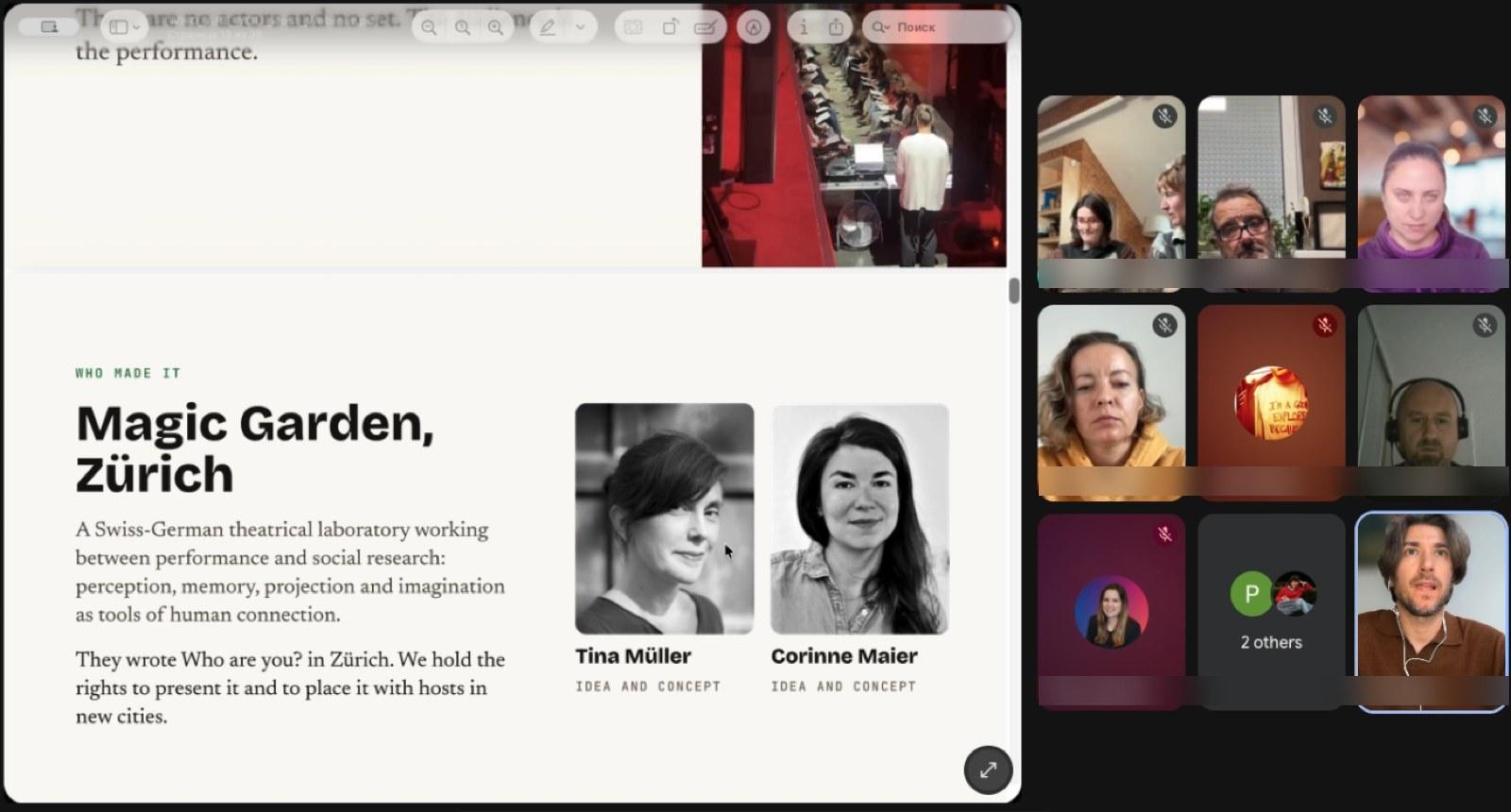
The format was created in Zürich by Tina Müller and Corinne Maier of Magic Garden. We hold the rights to present it and to place it with Hosts in new cities.
We tried it, right there on the call
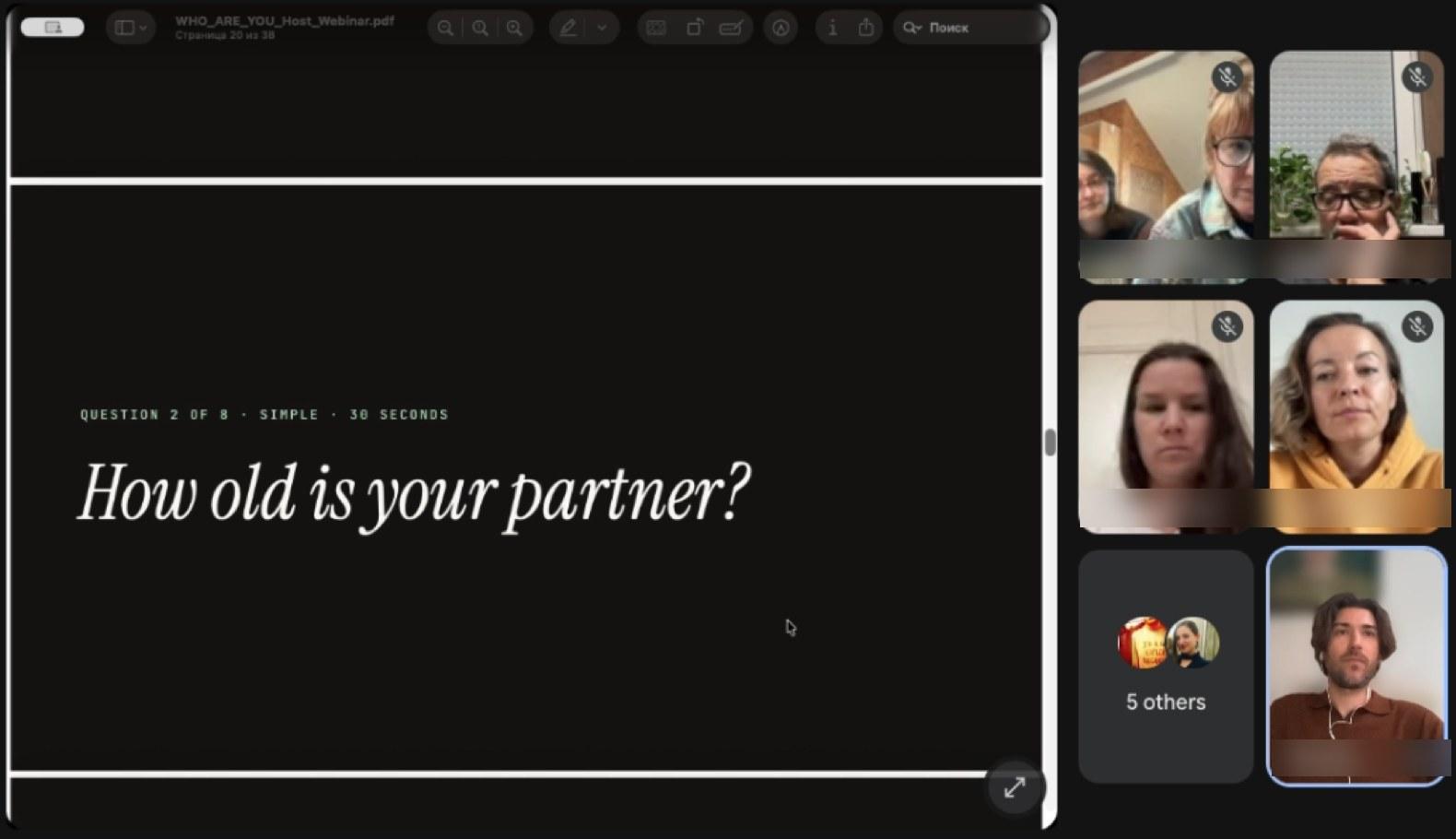
We paired people up, asked them to pin one another on the screen and to stay silent. Eight questions instead of a hundred. Which country is your partner from? Do they have a pet? What do they do when nobody is watching? What have they overcome?
Then everyone posted their guesses and read what had been written about them.
“It's 80% true.”
A participant, after eight questions through a webcam
“I didn't want to be wrong and risk being offensive, but I also wanted to really do it. And I laughed when I read that I might make wooden dolls. I think I'm going to now.”
Another participant
That was eight questions, online, with someone you had just met in a small window. In the room it is a hundred, face to face, and nobody knows the envelopes will be exchanged.
What a Host needs
- An open room for 20 to 150 guests. Not a theatre with fixed seats: a gallery, a coworking space, a club.
- Light from above so people can write, a basic sound system with a microphone, and chairs facing each other.
- Three people for the evening, and about four weeks to let your city know.
- No theatre background. You need to like people and to enjoy bringing them together.
It can be played in any language, one language per evening. In Limassol we often play three times in one day, with an hour between the shows to reset the room.
What people asked
What happens at the end? Is there a closing moment?
No. Once people are allowed to talk, we leave them alone. Pair by pair they drift away, and the last ones leave when the venue closes. One envelope stays sealed: they open it at home.
Do the guests become a community afterwards?
Not really, and it should not be forced. It is the opposite of speed dating: a slow, one-to-one encounter inside a full room. What does happen is that people come back, to sit across from someone new.
Does it work for companies and professional events?
Yes. We have played it for large companies whose people had never met each other, and the seats were gone in no time. Next March it goes to an HR conference.
How big is the team?
Three people run an evening: the voice, the host and a bartender. Nobody is irreplaceable, and anyone can be briefed quickly. If the venue has a bar, half of the work is already done.
Can it be sponsored?
The venue and the drinks are the easy part. Because the format comes from Switzerland, we are also looking at cultural funding that could support local Hosts.
What do you do, and what does the Host do?
We give the format, the brand, the training, the materials and our help along the way. The Host takes care of the room, the local promotion and the evening itself.
The draw, and what comes next
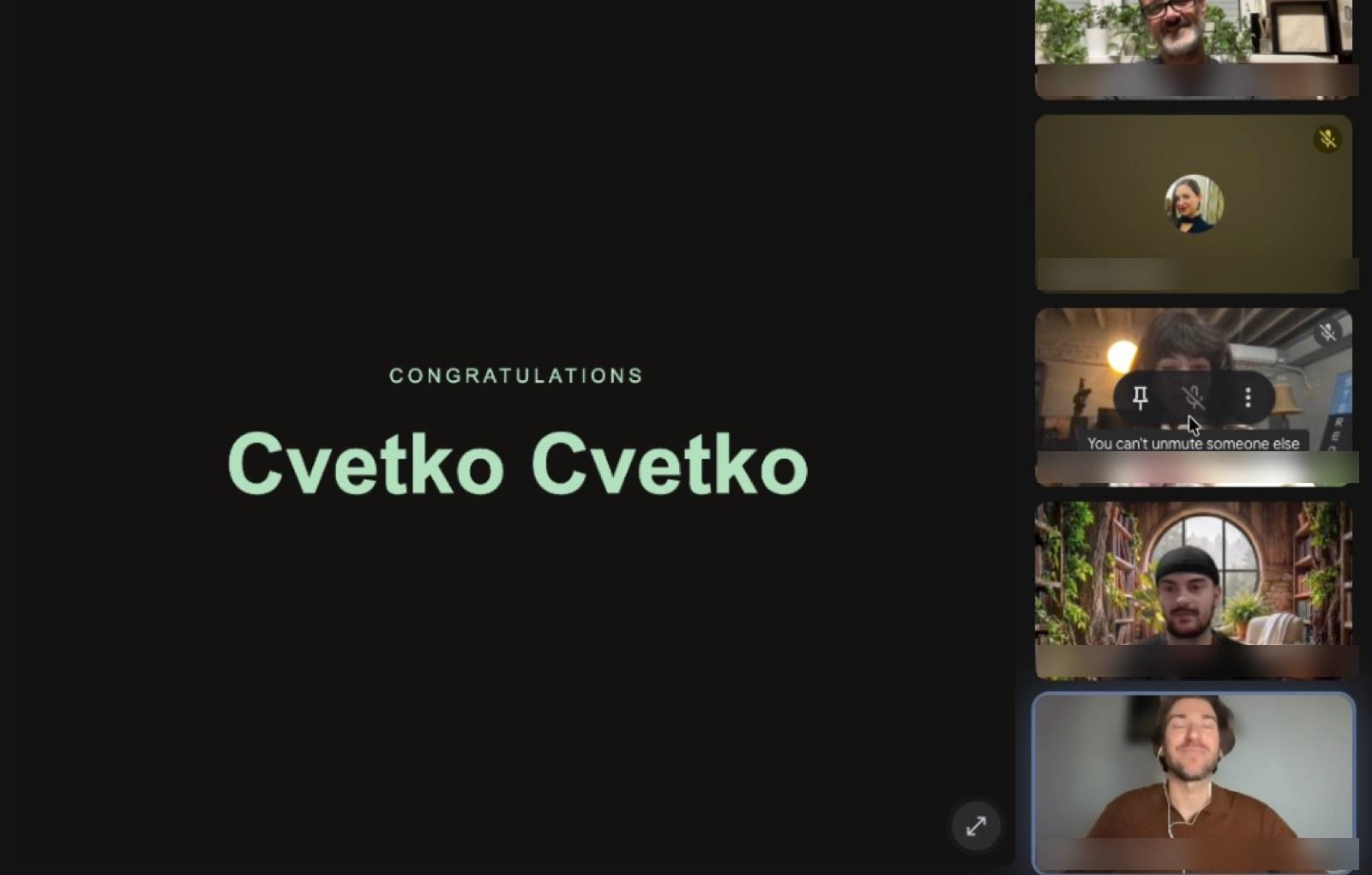
Six digits were hidden in the slides. Everyone who found them entered the draw for one free Event licence. It went to a team that runs a cultural centre in North Macedonia, with a hall, a bar, light and sound already in place.
The winner
Cvetko Cvetko
Applause from everyone on the call. One free Event licence goes to the cultural centre team in North Macedonia: the first evening is theirs to open.
From 1 December we are forming the first group of Hosts. We will train you, answer every question and help you open a first evening in your city around the New Year. You start with a single event, to try it yourself before you commit to anything longer.
- Fill in the application. It takes a few minutes.
- We talk, and see whether we are a good fit for each other.
- We help you open your first evening.